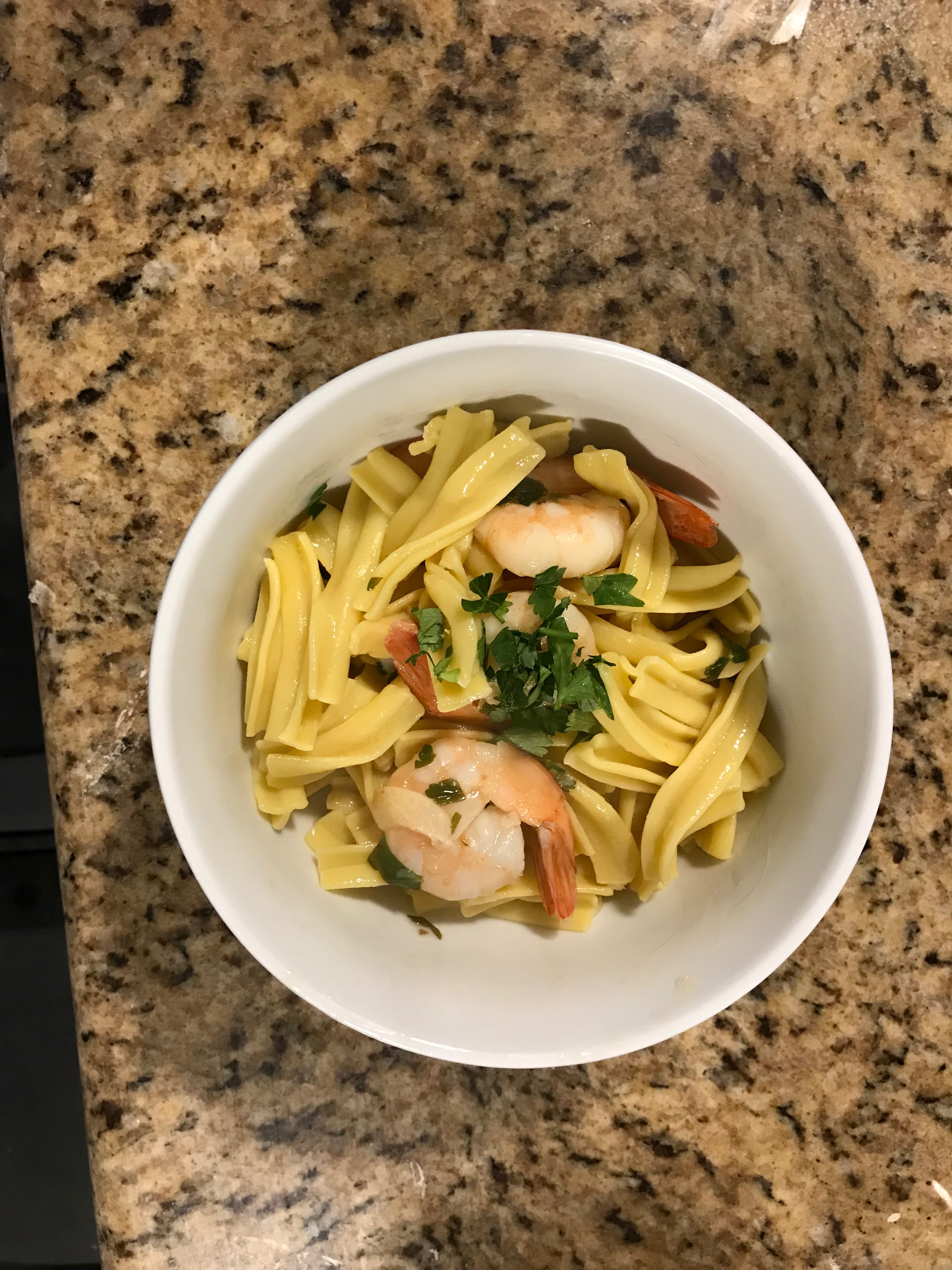
Seafood and I have never been great friends, much to my parents dismay. You would think that growing up on the coast of Florida, I’d be all about it. That couldn’t be further from the truth. It has only been recently that I’ve been trying more seafood and broadening those horizons. Being on the central coast of California, we have fresh seafood aplenty. This week, I decided to make a scampi. The Albariño wines go really well with seafood, and since my seafood is limited, shrimp was a given. I dived into my husbands cookbook, “The Food Lab” for this weeks inspiration.
One thing I’ve been really interested in lately is making my own pasta. I decided to give it a go this weekend, and go all out with the scampi by using homemade pasta instead of dried. I wasn’t prepared for the completely different texture! Fresh pasta is firmer upfront, more al dente, and then just breaks down. It only cooked for a couple minutes, and it was ready to go. There was most certainly a back up box of dried pasta in the pantry, not going to lie. I was not sure how this was going to work at all. The book I used was Flour and Water. They are actually a restaurant in San Francisco that I am dying to go to! I’m totally going to take my book with me and try and get the chefs to sign it. Not even gonna lie. I’ll be that person.
Garlicky Shrimp Scampi
- 12 garlic cloves (4 whole and crushed, 4 minced, 4 grated)
- 1 lb shrimp (whole if possible)
- 1/2 cup olive oil
- salt
- 1/4-1/2 tsp red pepper flakes (we always go on the high end)
- 1/2 cup dry white wine (we used the Albariño)
- 2 tbsp salted butter
- 1/4 cup chopped parsley
- 2 tbsp lemon zest
- 1 tbsp lemon
- 1 pound twisted or tubular pasta
- pepper
Full disclosure, we used frozen shrimp. The hubs forgot I needed whole shrimp, and he probably didn’t want to clean them anyway.
Peel shrimp (save the shell!), leaving the tail on. Place shrimp in a bowl, add minced garlic, 2 tbsp olive oil, and a little salt. Toss it around a little and let it sit. If you’re using frozen (like we did) thaw it out first as much as you can and then start your marinade. Go ahead and put your pasta water on here, let it boil and it should be super salty. Be sure to cook your pasta until al dente, and reserve a cup of the pasta water.
Heat the rest of the oil in a pan and add the smashed garlic cloves and shrimp shells until everything bubbles slightly. Reduce and cook for about 5 minutes or until fragrant. I let my oil/garlic sit for a while while I worked on the pasta to really let in infuse. Strain it through a fine mesh strainer, discarding the whole cloves and shells.
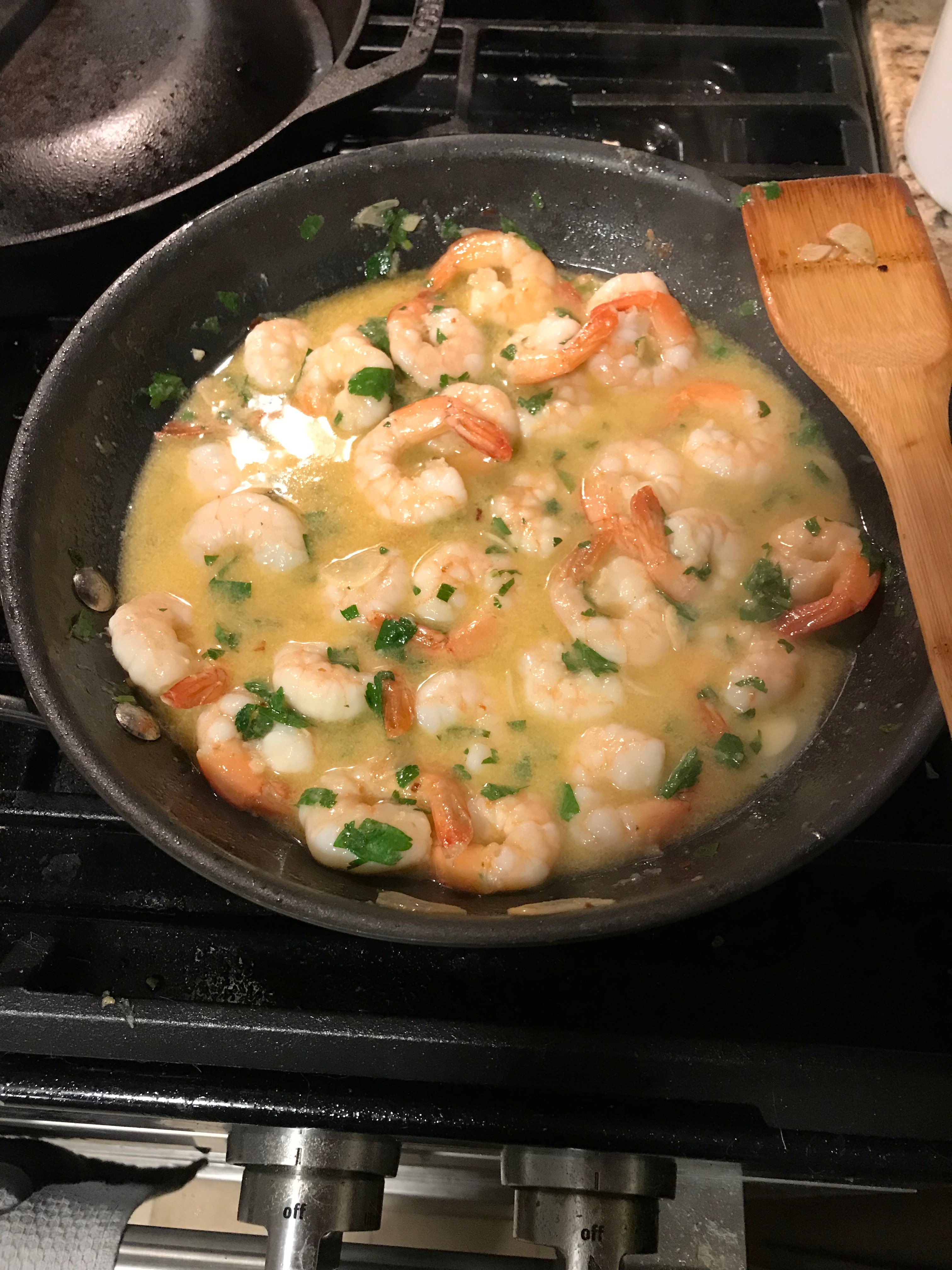
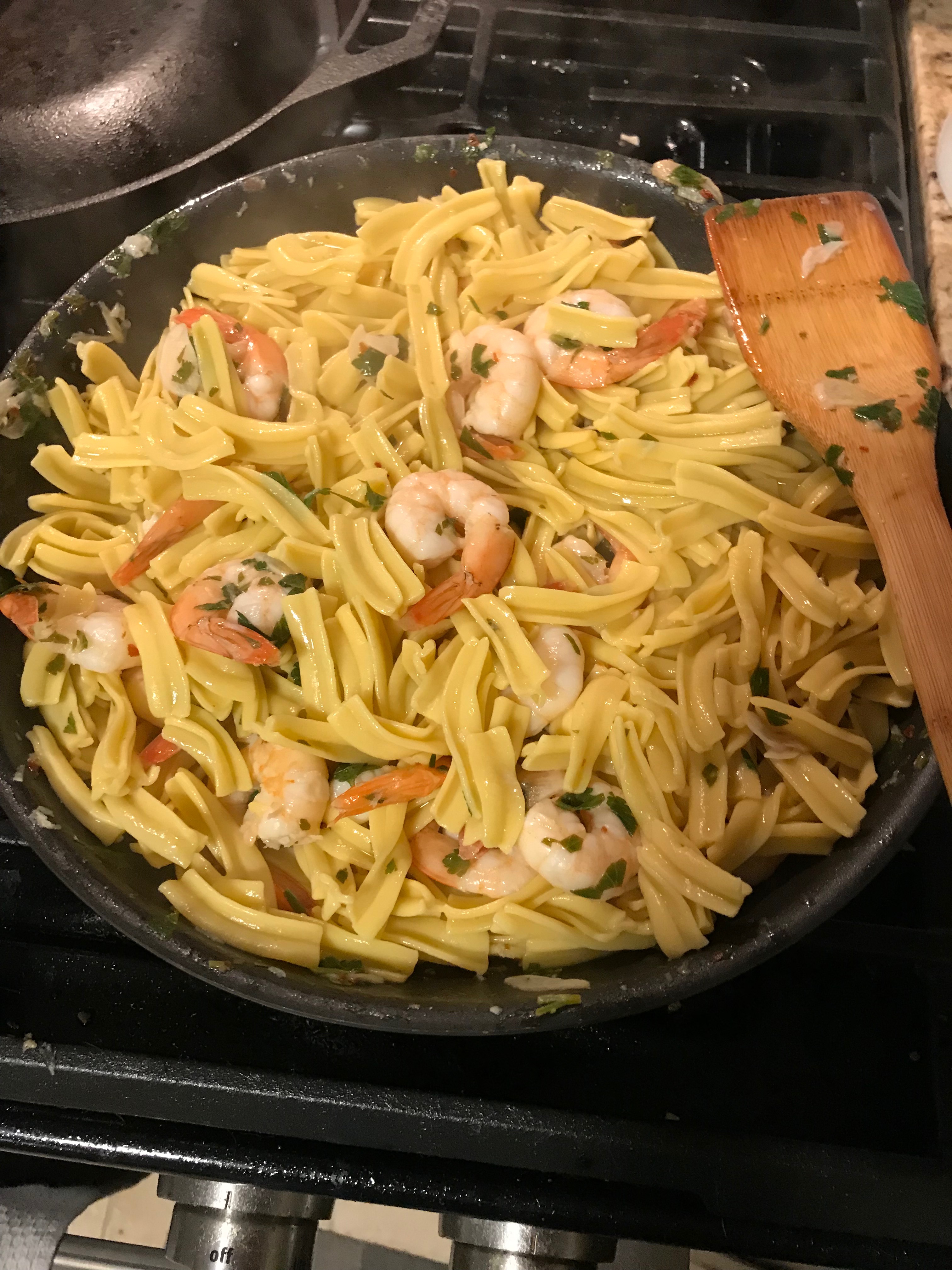
Put the oil back in the pan and heat. Add the sliced garlic, pepper flakes, and cook until the garlic turns slightly brown. Add your wine and cook down a little bit. Add your shrimp and toss/cook until they’re almost done through and turn off the heat. Add butter, lemon zest and juice, and parsley. Mix it all up. Combine with whatever pasta you made, dried or fresh! Use half of your reserved pasta water to help adhere the sauce to the pasta. Use more pasta water if needed.
Egg Dough Pasta
- 360 grams of 00 flour (well packed, unsifted)
- 1 1/4 tsp salt
- 300 grams egg yolks
- 1 1/2 tsp extra-virgin olive oil
Pasta making is broken into several parts: Mixing, kneading, resting, and then processing. The processing can be rolling, or putting it through a handy dandy KitchenAid attachment.
Mixing:
Put the flour in a pile on a clean counter, about 8-10 inches in diameter at the base. The salt goes on top of the mound, and then make a well. I used the base of my measuring cup, but you can use your hands. Just make sure that you leave some flour in the bottom and don’t go all the way through to the counter.
Add the wet ingredients carefully. Gently beat the eggs without messing with the walls or the bottom of your well.
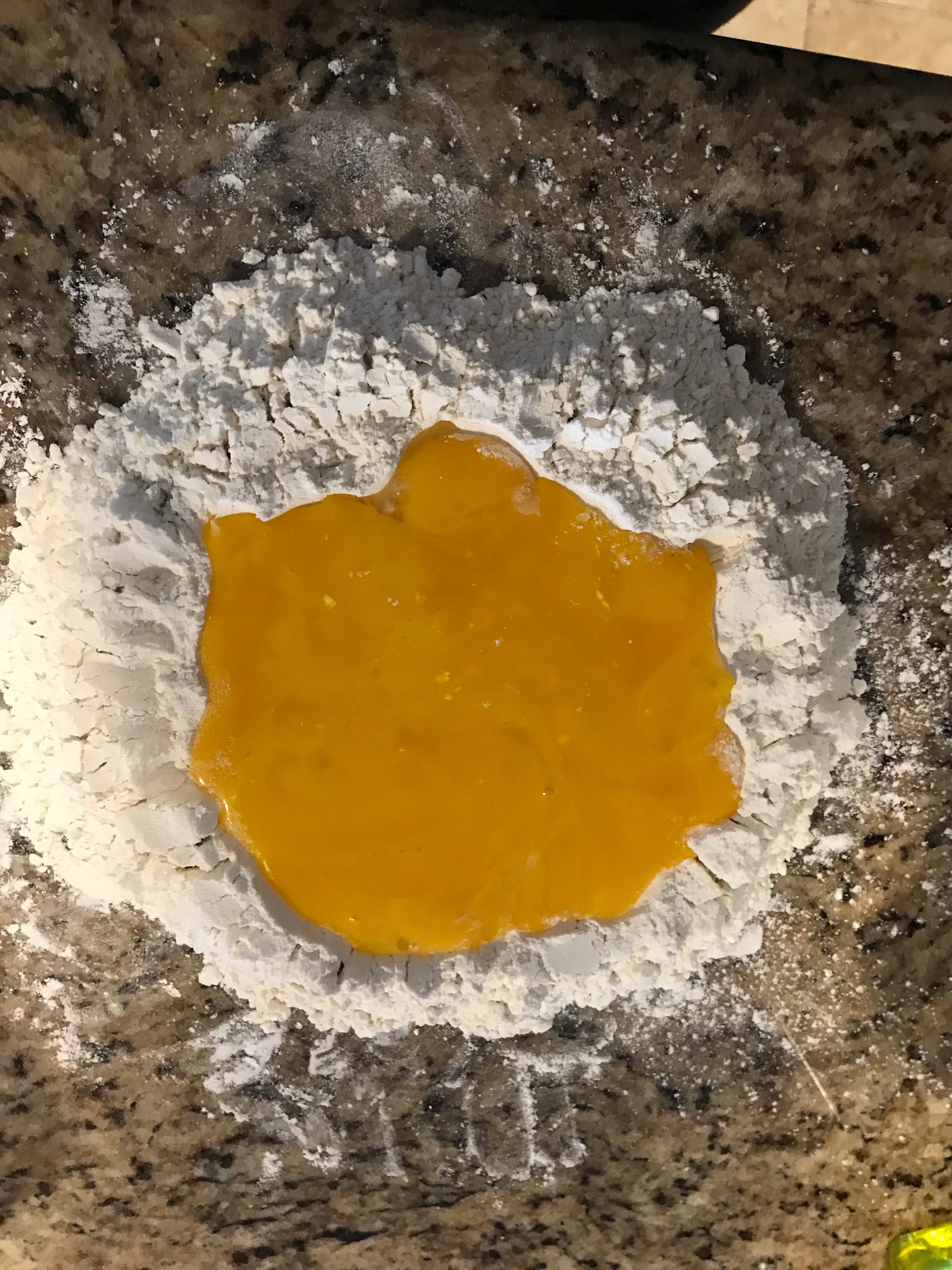
Continue stirring, and slowly work in the flour from the sides. Slowly work out to the outer edge, being careful not to disturb the base. The goal here is to slowly incorporate everything so that the flour has time to combine fully with the egg. Once the dough is good and thick/pasty start mixing in the flour on the bottom.
Flour and Water calls this a “slurry” and says that once it starts moving as a mass to scrape up the dough and flip it over to clear wet dough out from underneath. Here you start combining with your hands. Do your best to get all the flour in the dough. The dough will be dry and you’ll wonder what you’re doing wrong. The answer is you’re not keeping the dough wet. I kept a small bowl of water by my dough and when it started falling apart, I would just sprinkle water on the dough. You don’t want it sopping wet, just damp enough to hold. You will discard a little flour at the end, but thats fine.
Kneading:
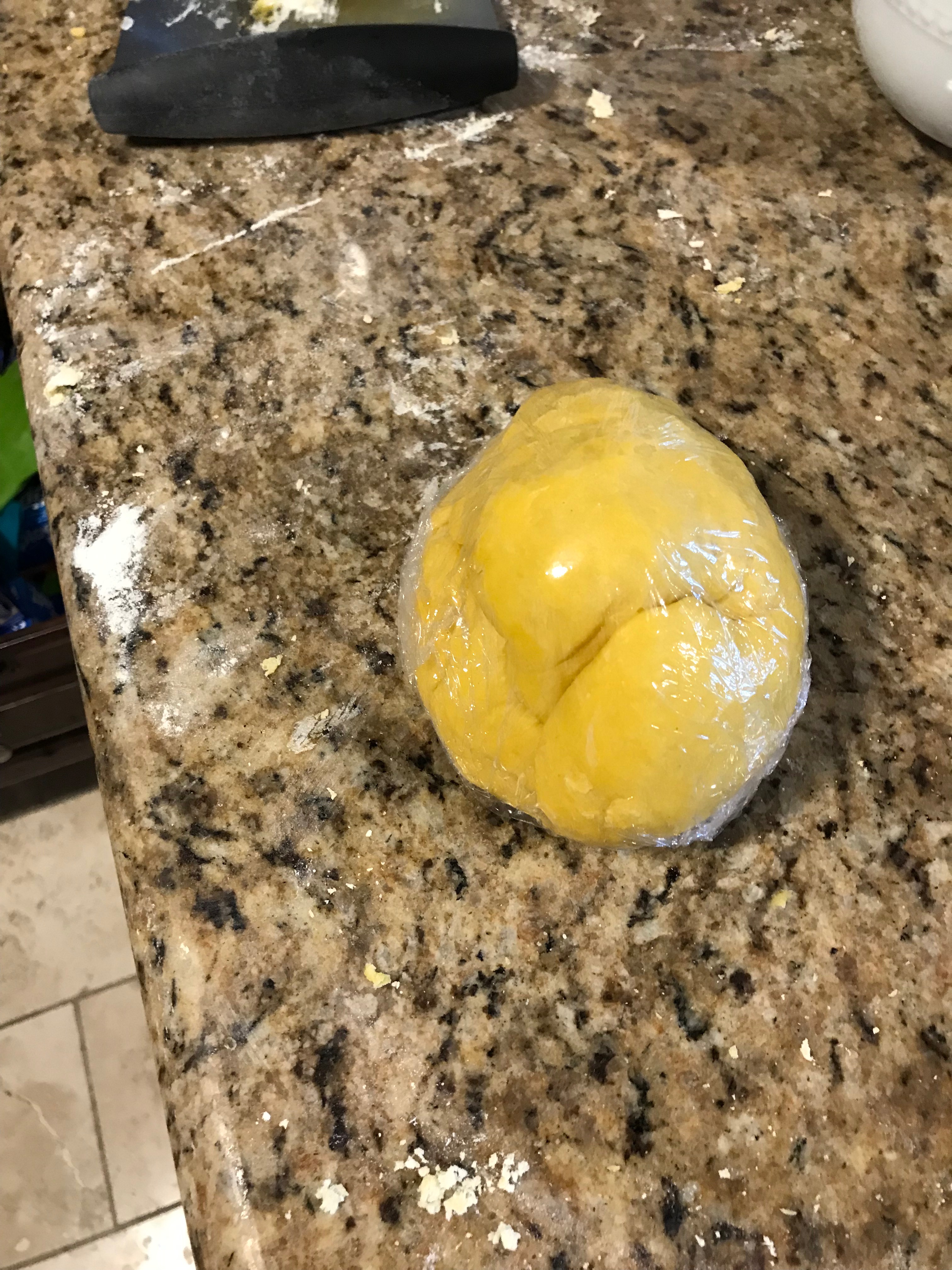
Kneading is so important. It need to be done for 10-15 minutes to realign the protein structure of your dough. I use the heal of my dominant hand and press it through, and then turn the dough as I press with my non-dominant hand. It really depends on you. You can’t over-knead pasta dough but it can be underdone. Knead until it is bouncy to the touch, and is very smooth. Think “Play-Doh”. Wrap it in plastic wrap and let it hang out for a while, at least 30 minutes.
Process:
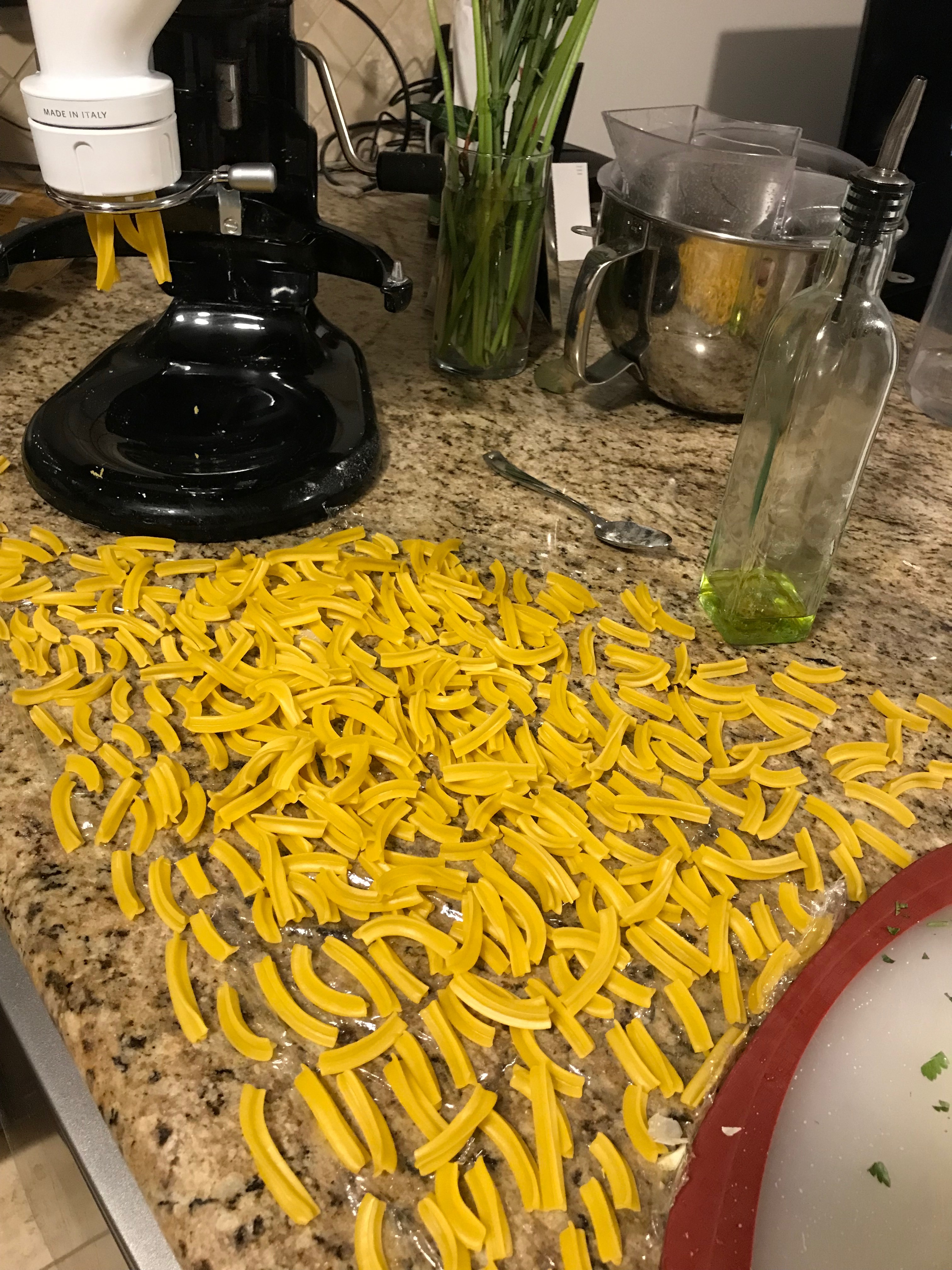
We have a nifty KitchenAid attachment that pushes dough out into different shapes. The one I chose was Fussili. I meant to choose Rigatoni, but didn’t read the directions. Surprise.
I used my fancy steel scrapper and got my dough into small piece, walnut sized was recommended. It took FOREVER and we had to use the attached wire cutter every few seconds to get the 1.5 inch pieces we needed. I spread everything out to hang until I was done because I didn’t want it to stick together and the book recommended not dusting it with flour.
Cooking:
Literally like 3 minutes. I tested it constantly, because I wasn’t sure when it would be done. You want a slight bite, but not the same bite you’d get with dry pasta. Dry pasta is uncooked in the middle and almost crunches, whereas fresh just feels…tough? It’s so hard to describe. It finishes cooking in the sauce, so if it feels like it needs another minute, go ahead and drain it.
Albariño
I totally forgot to get a picture this week. I was so ready to eat, that it didn’t even cross my mind. The Albariño grape is mostly grown in Spain and Portugal (although some California vineyards are producing too), and is a light, white grape that loves heat and humidity. It has a lot of citrus notes, which is why it goes so well with seafood! The acidity is high, but the sweetness is low, which makes for a really great balance. This would go well with any seafood dish. We will definitely be looking into more of this wine varietal!
 Cooking is Elementary